


4 Month Sleep Regression: Why It’s Actually a Progression
The 4 month sleep regression is a temporary stage and a positive sign of development
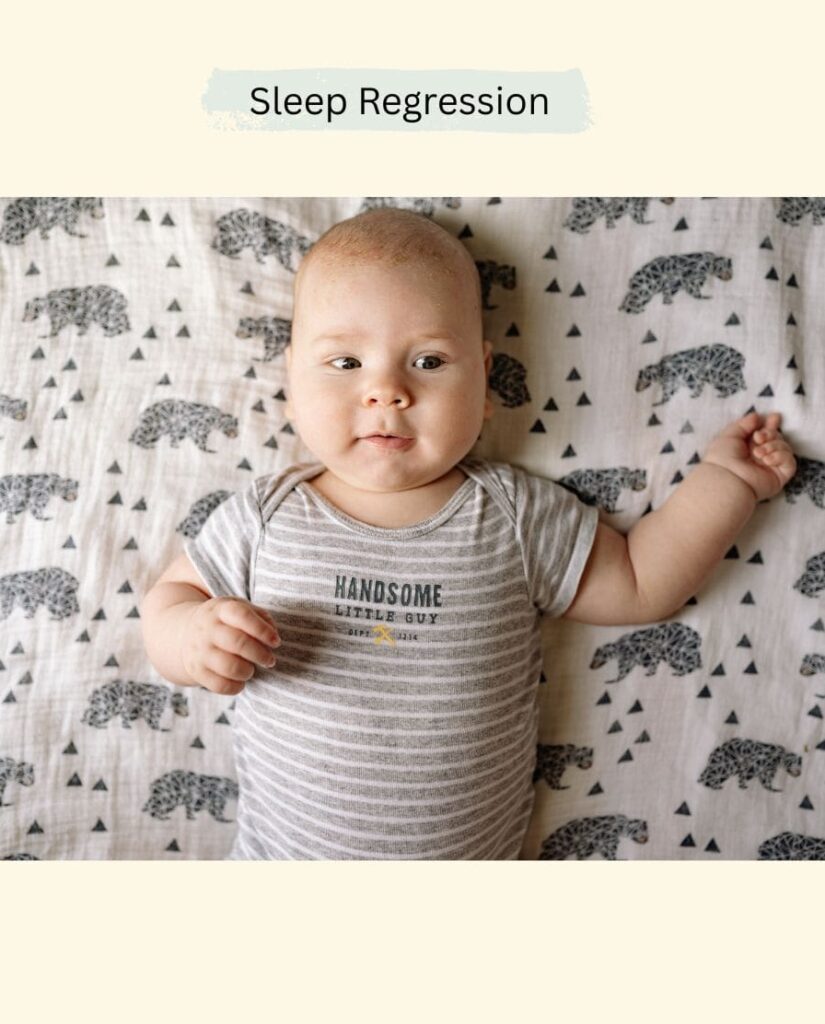
If You’re in the Thick of the 4 Month Sleep Regression, I Want You to Hear This First
If you are in the thick of the 4 month sleep regression, and your baby was giving you a few longer stretches before suddenly everything changed…
You are not imagining it.
And you are definitely not alone.
This phase can feel so defeating.
Just when you think you are getting your footing, sleep suddenly becomes unpredictable again.
I remember wondering what happened and whether it would ever get easier.
But here is the gentle reframe I want you to hold onto:
The 4 month sleep regression is not really a regression at all. Instead, it is a progression.
It is a sign that your baby’s sleep is maturing. In other words, it points to developmental growth.
What Is the 4 Month Sleep Regression?
The “4 month sleep regression” is the term most parents search for, but biologically, this stage is better understood as a sleep progression.
Around this age, your baby’s sleep begins to shift from the simpler newborn pattern into a more mature sleep structure with distinct sleep stages. As a result, sleep can suddenly feel much more unsettled.
In other words, your baby is not sleeping “worse” because something is wrong.
Your baby is sleeping differently because development is happening.
Why the 4 Month Sleep Regression Is Actually a Positive Milestone
I know it may not feel positive at 2 a.m., but this shift is a sign of healthy neurological and sleep development.
At around 4 months, babies begin moving through sleep cycles in a more mature way. Instead of drifting through newborn sleep in the same loose pattern, they start cycling through lighter and deeper stages more distinctly. That means they are more likely to briefly wake between cycles, especially if they need support getting back to sleep. Healthychildren.org, says babies begin to have more regular sleep cycles around 4 months, while Stanford Children’s notes babies generally do not have regular sleep cycles until about 6 months and that variation is normal.
Because of this, the 4 month sleep regression can bring:
- more frequent night wakings
- short naps
- more difficulty settling
- increased fussiness around sleep
However, those changes often reflect maturation, not backtracking.
Common 4 Month Sleep Regression Signs
Although every baby is different, common signs of the 4 month sleep regression include:
- suddenly waking more often overnight
- naps becoming short or unpredictable
- fighting naps or bedtime
- waking 30–45 minutes after being put down
- seeming harder to settle than before
- acting more distracted during feeds
Because your baby is more alert and aware at this stage, sleep can feel lighter and more easily disrupted.
Why This Happens Around 4 Months
Before this stage, newborns sleep in shorter, less organized cycles. Healthychildren.org explains that newborns may sleep 16 to 17 hours a day but often only for 1 to 2 hours at a time, and that regular cycles do not emerge until around 4 months.
As babies grow, their sleep architecture changes. This is one reason parents often feel like their baby “used to sleep better.” The reality is that newborn sleep was different.
For this reason, if your baby suddenly seems more wakeful, more sensitive to schedule changes, or more prone to short naps, it makes sense. Their sleep is becoming more mature.
How Long Does the 4 Month Sleep Regression Last?
This is one of the most searched questions, and understandably so.
However, the good news is that this phase is temporary.
How long it lasts can vary depending on:
- your baby’s temperament
- how overtired they become during the day
- whether their schedule supports age-appropriate sleep
- whether they are going through a growth spurt or developmental leap
For some babies, it is a shorter bump in the road. For others, it lingers until more consistent sleep foundations are in place.
How to Help Your Baby Through the 4 Month Sleep Regression
Because while this phase is developmental, there are absolutely ways to support your baby through it gently and effectively.
1. Prioritize Age-Appropriate Wake Windows
At this age, many babies do best with wake windows beginning around 75 to 120 minutes for a 4 month old and slowly increasing to 90 to 150 minutes as we approach 6 months.
Because of this, one of the biggest helpers during the 4 month sleep regression is making sure your baby is not staying awake too long.
Download my free wake windows guide to stay ahead of overtired-ness.
2. Protect Naps
Better nights start with better days.
When naps become inconsistent, babies often become overtired. And overtired babies tend to wake more overnight, fight bedtime harder, and take shorter naps. Babies thrive on a regular daily routine for sleep, meals, naps, and play because consistency helps children feel secure and supports smoother sleep.
3. Avoid Overtiredness
This is a huge one.
Parents often assume that keeping a baby up longer will lead to better nighttime sleep. However, overtiredness usually does the opposite. Cleveland Clinic specifically recommends a schedule and warns not to skip naps or keep babies up late because that can lead to overtiredness and make self-soothing harder.
4. Keep Bedtime Consistent
Consistency matters so much during periods of developmental change.
A simple, predictable bedtime routine helps signal to your baby that sleep is coming.
5. Remember That This Is a Progression, Not a Failure
This matters just as much as the practical tips.
Your baby is not broken.
You are not doing anything wrong.
And this phase does not mean you have lost all progress.
This is a developmental shift. It is temporary. And with the right support, your baby can absolutely move through it.
When to Reach Out for Help
Sometimes the 4 month sleep regression is a brief developmental phase. Other times, it exposes deeper schedule or sleep foundation issues that were easier to “manage” during the newborn stage.
If you find the following issues arise with your baby, it may be time for further support:
- your baby is waking every hour
- naps are consistently falling apart
- bedtime is becoming a battle
- you feel anxious, exhausted, or unsure what your baby needs
This is exactly where I help families the most — looking at the full picture, making gentle adjustments, and helping you understand what your baby’s sleep is communicating.
Discover my Sleep Services here!
You Don’t Have to Just “Wait It Out” Alone
Yes, the 4 month sleep regression is temporary.
Yes, it is a progression and a positive developmental milestone.
But that does not mean you have to white-knuckle your way through it.
With the right schedule, the right rhythm, and the right support, this stage can feel far less overwhelming.
Ready for personalized sleep support?
Peep to Sleep Essentials
A clear, personalized plan for families who want to make changes with confidence.
Peep to Sleep Signature Support
Real-time support for families who want daily guidance and reassurance.
Peep to Sleep Concierge Experience
My highest level of support for families who want a more hands-on, high-touch experience.
Final Thought
If you are in the thick of the 4 month sleep regression right now, take a deep breath.
This is not a step backward.
It is a sign of growth.
It is a progression.
And it is temporary.
Your baby is learning.
Their sleep is maturing.
And with the right support, better sleep is absolutely possible.
Wondering when your baby will sleep through the night?
Check out my When do babies sleep through the night blog here!
Sara Morse, formerly of Not a Peep Sleep Consulting, is the creator of The Peep to Sleep Method — a responsive, attachment-focused sleep approach designed to support babies and parents through gentle sleep transitions.

Certified Pediatric Sleep Consultant & Postpartum Doula


Guide to Understanding Toddler Sleep Regression
Sleep Training with a Gentle Approach
Why Seeking Sleep Advice for Your Baby on Social Media Could Harm

Sara Morse is the founder of The Peep to Sleep Method, a Pediatric Sleep Consultant and Postpartum Doula that services clients in the Hudson Valley and nationwide. Her method is gentle and attachment based, prioritizing daytime sleep, nervous system regulation and real-time support, settling the foundation for independent sleep without sacrificing connection.


Disclaimer:
Sara Morse | The Peep to Sleep Method is intended for informational and educational purposes only and should not be used as a substitute for medical advice or treatment. Always seek medical advice from your MD or other qualified healthcare professional regarding medical concerns, care, and diagnosis. Sara Morse | The Peep to Sleep Method is to be used at your own risk and will not be held liable for any damages or injuries that may occur.
